Key Insights:
- Staking allows users to lock coins on proof-of-stake networks and earn rewards without selling digital assets.
- Delegators and validators work together, ensuring network security while distributing staking rewards to participants.
- Staking rewards vary based on coins locked, duration, and network participation, offering consistent passive income opportunities.
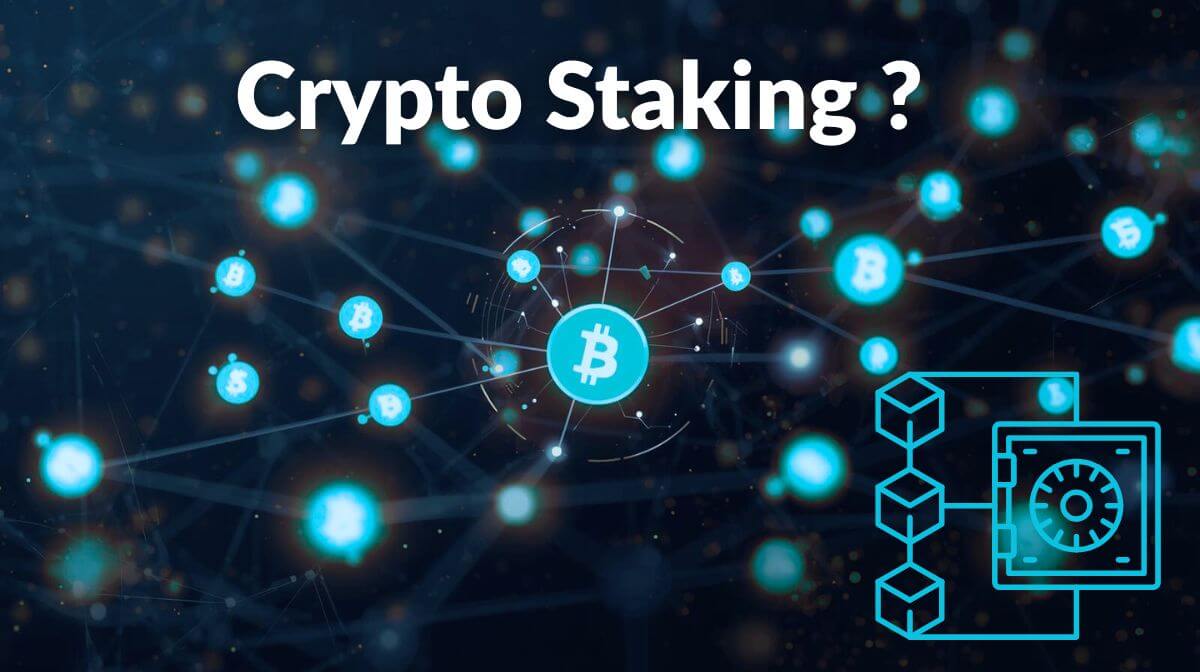
What is staking in crypto? Staking refers to the process of depositing (or “staking”) a digital coin within a blockchain in order to support that blockchain to perform and grow, and, as a result, earn rewards for this support. By staking some coins, a user can earn passive income from their holdings of digital assets without needing to sell them.
How crypto staking works
Since staking allows for continuous returns while keeping coins in the owner’s wallet, it has seen a surge in popularity among investors.
Investors can also choose how long they want their coin staked and how much their reward will be based on the number of coins they have staked in conjunction with the rules governing the network.
Since staking does not require users to check their accounts daily, this has made it a very easy method for long-term investors to increase their holdings in cryptocurrency, compared to trading.
A popular question asked about staking in cryptocurrency is, “What does it mean to make cryptocurrency staking?” The answer can be simplified to the following explanation: For blockchains that utilize proof-of-stake consensus mechanisms, participants of the blockchain network validate transactions and produce new blocks of data.
The blockchain network chooses participants based on the number of coins that are being locked up or staked to act as validators.
Users can either serve as validators by running their own nodes or as delegators and have their coins sent to and managed by a validator.
Delegators are still able to share in the rewards produced, but they do not need to know how to operate or maintain the technical aspects involved in creating and verifying a blockchain.
This is particularly beneficial for new users because it provides a way for them to participate in staking without needing a lot of knowledge or experience.
Most new users start by delegating their coins to trusted validators so that they can share in the rewards produced while contributing to the security of the blockchain.
Calculating staking rewards
To better understand staking, it’s important to understand how rewards are calculated. Payments of staking rewards in many networks depend on several factors, including the amount of coins staked by validators, the rate of inflation within the network, and the overall performance of the validator.
Most networks pay staking rewards daily, weekly, or at the end of every blockchain cycle. In some networks, staking rewards may have a lock-up period.
In some networks, you may withdraw staking rewards at your convenience. The longer you stake your coins, usually the greater the number of rewards earned.
Locking your coins for an extended period will limit your ability to pull them out of the system.
Depending on the level of participation in the network staking program, rewards may be diminished.
More participants staking on the network will cause the reward per coin for staking to decrease; however, the overall security of the blockchain will continue to increase with the additional contributors.
This knowledge will help investors with their crypto passive income investing strategies effectively.
Risks of staking in crypto
Staking is a way to generate rewards on your cryptocurrency, but staking there use risks associated with it.
One of the biggest risks associated with staking is that the price of the coins may fall while the tokens are still locked, which decreases earnings for the user.
Some blockchain protocols will implement slashing rules for validators. Slashing will punish the validator for any misconduct.
If a validator behaves improperly or does not follow the rules, then any user who delegated coins to this validator may lose part of their staked coins.
To minimize staking risk, it is recommended to only stake to trusted validators and reputable networks. Before staking, doing research can provide the user with a safer return on their investment and a more consistent reward
Using staking for passive income crypto
What is staking, and how can it be used as a practical way to earn passive income in the crypto world? Unlike trading, staking does not require much effort daily and promises a guaranteed return on investment.
Staking is part of the long-term investment strategy. Staking helps investors receive rewards on a regular basis while supporting the blockchain network. Some people also monitor the staking trends on X (formerly Twitter).
This information could help investors make the necessary adjustments in their staking strategies. Some people stake their tokens in more than one network in order to maximize their rewards and minimize the potential risks that come with staking in one network.
Choosing the right staking approach
When learning about what is staking, it is essential to use the appropriate approach. Consider the reputation of the network, the rewards offered, and the lock-up terms. The network may have flexible staking, while in other cases, the coins may be required to be locked for months.
For new users, it might be best to delegate coins to trusted validators. For advanced users, running one’s own nodes can provide the best security and reward benefits. Diversification among various blockchains can also provide security and reward benefits.
Investors should be aware of rewards and network updates. Updates in the network, fees, or even validators may affect rewards. Being aware of staking trends will provide a smoother experience.
Final thoughts
What is staking, and how safe and efficient is it to earn more coins while supporting a blockchain network? Investors can earn more coins by staking their assets and increasing their passive income in crypto assets. It is important to understand rewards, lock-up period, and risks before you start.