

Key Insights
- The Netherlands will be taxing unrealized crypto gains starting in 2028, and replacing the affordances for deemed returns from Box 3.
- Oklahoma aims to enable Bitcoin payments for state employees and vendors, as well as explore other methods of implementing public sector crypto adoption.
- Increased Global Focus On Post-Quantum Security Planning for Institutional Adoption of Cryptocurrencies Through Regulation, And Increased Interest in Institutional Adoption.
Crypto regulation is moving to a new chapter as governments, financial systems, and blockchain networks adjust their regulations regarding taxation, payment systems, security measures, and liquidity management. This is based on recent developments in Europe and the United States regarding coordinated measures to fit cryptocurrencies with existing financial systems.
Netherlands Moves Toward Taxing Unrealized Digital Asset Gains
The Dutch Parliament approved a new plan to reform the Box 3 System for taxes on wealth. The Parliament created this new plan to replace the current system, which taxes based on assumed average returns, with a tax system based on the actual return on investments each year, including unrealized gains from digital currencies such as cryptocurrencies.
In the new plan, there will be a tax rate of 36% for interest, dividends, and asset appreciation above a threshold of €1,800.
For losses sustained, taxpayers under the new plan may carry over any loss in value from one tax year to future tax years. The transition to the new plan was due, in part, to the decisions of a number of courts in previous years that concluded that the current method of taxation was unfair and legally invalid.
Investors in cryptocurrencies fear that taxing unrealized gains on annual tax returns may put a strain on their liquidity.
There has been much resistance from the public regarding the new plan and the taxation of unrealized gains, and the petition “Stop belasting op papieren winst” has gained over 10,500 signatures, which signals that there is a growing debate on the issue of crypto regulation in Europe.
Oklahoma Advances Bitcoin Payments for Public Use
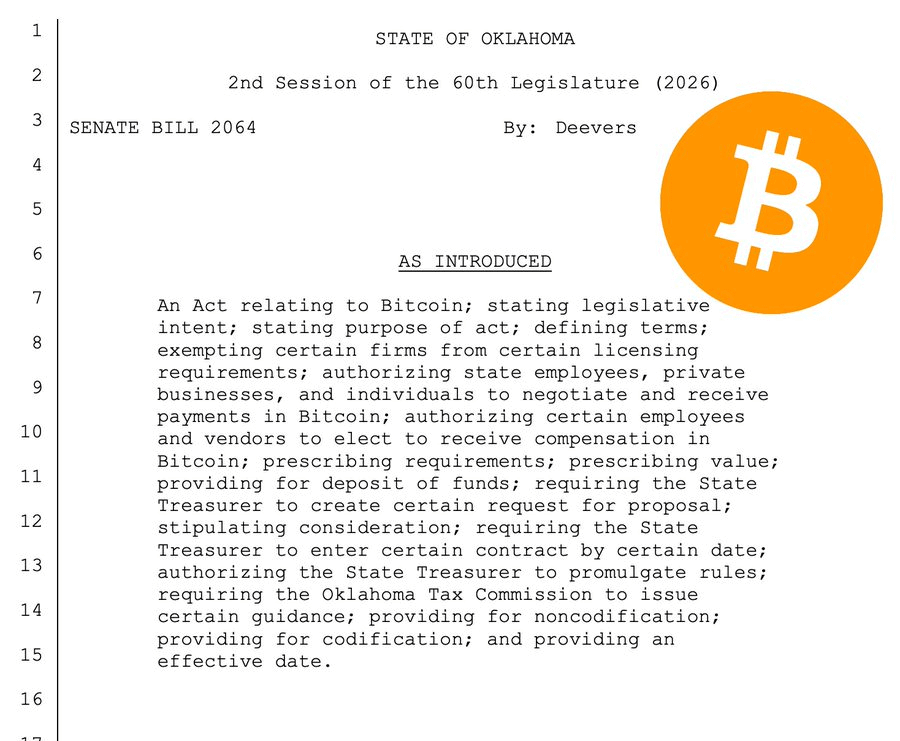
Oklahoma lawmakers are currently working on legislation allowing state employees to be paid in Bitcoin, as well as allowing vendors to accept digital forms of payment for their goods or services.
If it becomes law, Senate Bill 2064 would create an opportunity to introduce cryptocurrency to the state’s payment ecosystem.
Introduced on January 15, Senate Bill 2064 assigns responsibility for the selection of a digital asset company to the State Treasurer.
The Treasurer must choose a company by January 1, 2027, based on speed, price, security, and tax advice from the Oklahoma Tax Commission.
Bitcoin Magazine reported that it will further advance Oklahoma’s efforts at the state level to make cryptocurrencies acceptable payment methods.
If the bill passes, the law will go into effect on November 1, 2026, continuing Oklahoma’s policy of being supportive of the use of cryptocurrencies.
Source: X
Ethereum Prioritizes Post-Quantum Security Planning
Ethereum’s development team is focusing on the long-term technological risks facing the blockchain industry as well.
The Ethereum Foundation has created a team dedicated to this issue, focusing on post-quantum security, which has become part of the core development roadmap for Ethereum.
According to a Coin Bureau article quoting Ethereum developer Vitalik Buterin, the estimated probability of quantum computers posing an immediate threat to current cryptography and digital currencies by 2030 is approximately 20%.
This information has pushed protocol durability and resilience to the forefront of conversations regarding crypto regulation.
The goal of this project is to prepare for network upgrades as early as possible, even prior to the existence of any real-world threats.
This strategy demonstrates the growing alignment between developers and regulators across the cryptocurrency industry regarding the critical need for robust infrastructure and effective risk management strategies.
Markets React to Institutional and Policy Signals
The market structure for Bitcoin and Ethereum ETF (Exchange Traded Fund) Options at Nasdaq is changing due to the removal of Position Limits, or limitations on the number of Contracts per trader (currently 25,000).
This change enables increased options for Larger Hedging Strategies and Greater Liquidity for Institutional Participants.
This new rule change was highlighted by CryptosRus, who indicated that this development brings Crypto ETFs more in line with Traditional Commodity Funds, which may enable more widespread participation without changing the Underlying Asset Exposure Rules for Crypto ETFs.
Coin Bureau recently reported that the Odds for Polymarket favor Rick Rieder, a Senior Executive at BlackRock, as a potential Nominee to Become Chair of the Federal Reserve.
In addition, Arthur Hayes suggested that there could be some Dollar Liquidity connected to Japanese Government Intervention in the Yen, which could provide a Positive Impact on Bitcoin. This information was reported in a subsequent Update by Coin Bureau.
Final Thoughts
Crypto regulation continues to mature through tax reform, payment integration, security planning, and market access changes. These coordinated actions show governments and institutions treating digital assets as long-term financial components. As policies tighten and infrastructure evolves, crypto markets remain closely tied to regulatory clarity, technological readiness, and global monetary signals.