Key Insights:
- Vitalik Buterin is committed to the decentralization of social media and aims to return fully in 2026.
- Buterin critiques the current state of social media, emphasizing the harmful impact of “corposlop.”
- Decentralized platforms like Lens and Farcaster align with Buterin’s vision for a more user-focused, ethical internet.
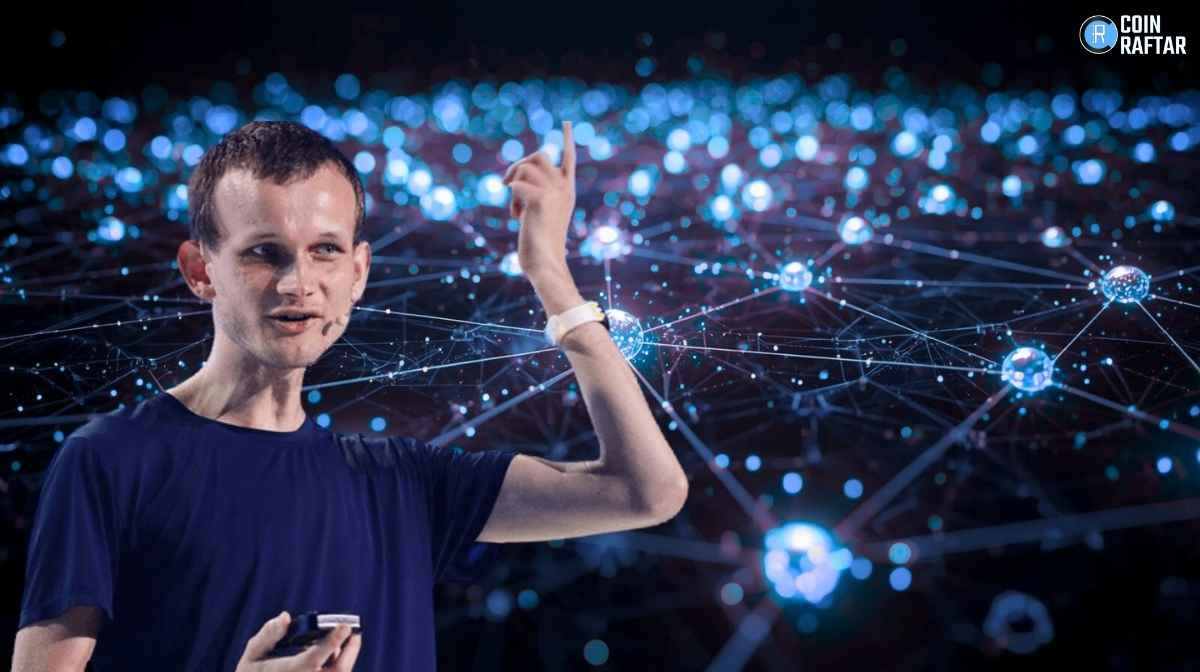
Ethereum co-founder Vitalik Buterin has told him that in 2026 he will go all in with decentralized social networks again.
With this announcement comes his assumption that the future of mass communication tools should focus more on the long-term user interest than on the short-term engagement.
Buterin has condemned the existing social media, describing it as “corposlop” (a condition that he applies to platforms that drive social media responses that maximize the release of outrage and dopamine to make money at the cost of the well-being of the users).
He makes it clear that the answer to more sustainable and meaningful online interactions is in decentralization.
Vitalik Buterin’s Vision for Decentralized Social Networks
Buterin claims that the existing instruments of mass communication are faulty. He describes how the platforms that exist today are profit-driven and support this with algorithms that exaggerate negative emotions and monetize divisive content.
In 2026, I plan to be fully back to decentralized social.
If we want a better society, we need better mass communication tools. We need mass communication tools that surface the best information and arguments and help people find points of agreement. We need mass communication… https://t.co/ye249HsojJ
— vitalik.eth (@VitalikButerin) January 21, 2026
His assertion is that decentralization of social media is the way forward, where the user is not controlled by the social media but vice versa.
Buterin emphasizes that decentralization will enable any person to create his or her own client and communicate with a common data layer.
His future imagines a world in which individuals will be compelled to use social media platforms that are relevant to their long-term goal rather than platforms that are driven by short-term engagement measures.
Though the decentralization of social media is regarded as far-fetched, Buterin states that he has already made some steps in this direction.
He has been posting on Firefly. social only since the start of the year, which is a multi-client platform that accepts decentralized platforms such as Lens, Bluesky, and Farcaster.
Buterin has discovered that these platforms provide a fresh breeze of change over the centralized and corporate-dominated platforms that take up the internet today.
He, however, admits the shortcomings of platforms such as Bluesky, particularly because it has a character limit, which is not the best to use for his long posts.
Lens and Farcaster: Key Platforms for Decentralization
Vitalik Buterin is also aiming at making more efforts on Lens as part of his 2026 plans. Lens is a decentralized social network that is based on blockchain technology, which fits the vision of Buterin regarding a more user-centric internet.
He has urged other people to consider using decentralized platforms such as Lens and Farcaster since he feels they offer people an alternative to the current profit-driven social media giants.
By promoting the usage of such decentralized networks, Buterin hopes to end up with a more open and diverse social media ecosystem.
Buterin especially believes in the work of the Aave team in the management of the development of Lens.
He compliments their work, saying that the team has been very committed to developing a platform that fulfills the social needs instead of merely making a profit.
This dedication can be seen as in line with his personal values, which state that decentralized social media sites should be powered by people who are interested in the social dimension rather than corporate gains.
Understanding “Corposlop” and Its Dangers
The idea that Butterin relies on to criticize the existing social media platforms is what he calls corposlop. He used the term to refer to the unhealthy competitiveness of social media that prevails in the mainstream.
According to Buterin, these platforms are aimed at maintaining the reader’s attention with outrage, sensationalism, and addictive content, which eventually causes a negative effect on society.
In his opinion, these platforms are based on short-term profitability, rather than on long-term user satisfaction and well-being.
Buterin emphasizes that the contemporary situation of social media is an expression of soulless, trend-following homogeneity, which is both lame and evil. Conversely, he proposes the idea of a sovereign web where people own their information and the sites that they access are built in a way that encourages privacy, authenticity and empowerment of their persons.
To Buterin, the sovereign web solution is decentralization, which he perceives as the remedy to the corporate interference and privacy breach of the conventional social networks.
The Sovereign Web: Building a Better Internet
Vitalik Buterin imagines a decentralized web that empowers people by making them have control over their own data.
In this new age of the internet, consumers will have the power to select platforms that resonate with their values, be it the need to focus on privacy, the freedom of speech, or decentralization.
These decentralized platforms will require blockchain technology to be important in helping to create them; Butterin feels that with the use of blockchain technology, it will be possible to create a transparent and secure system with a user-centric system.
Unlike the traditional web, where the corporations make the web their monopoly through Facebook, Twitter, and Instagram, the sovereign web provides a more open and fair method of online interactions.
It is a philosophy of user sovereignty and guarantees that individuals are able to control their digital identities. Such, according to Buterin, will result in a more ethical and sustainable internet that will be of benefit to the entire society.
Vitalik Buterin’s Call for Change
The call by Vitalik Buterin to have the social media returned to a decentralized form in the year 2026 is resonant enough to remind us about the significance of user sovereignty in the digital era.
The need to create a more ethical and user-centric internet can be outlined by his critique of corposlop and his idea of the sovereign web.
In the future of social media, the push of these networks by Buterin as the decentralized platforms such as Lens and Farcaster continue their growth can be vital.