Key Insights
- European leaders publicly reject U.S. pressure, signalling unified resistance to tariff-linked trade demands.
- Treasury officials express confidence that courts will uphold tariffs imposed under emergency economic powers.
- Real-time inflation readings weaken the case for tight policy, reshaping expectations across financial markets.
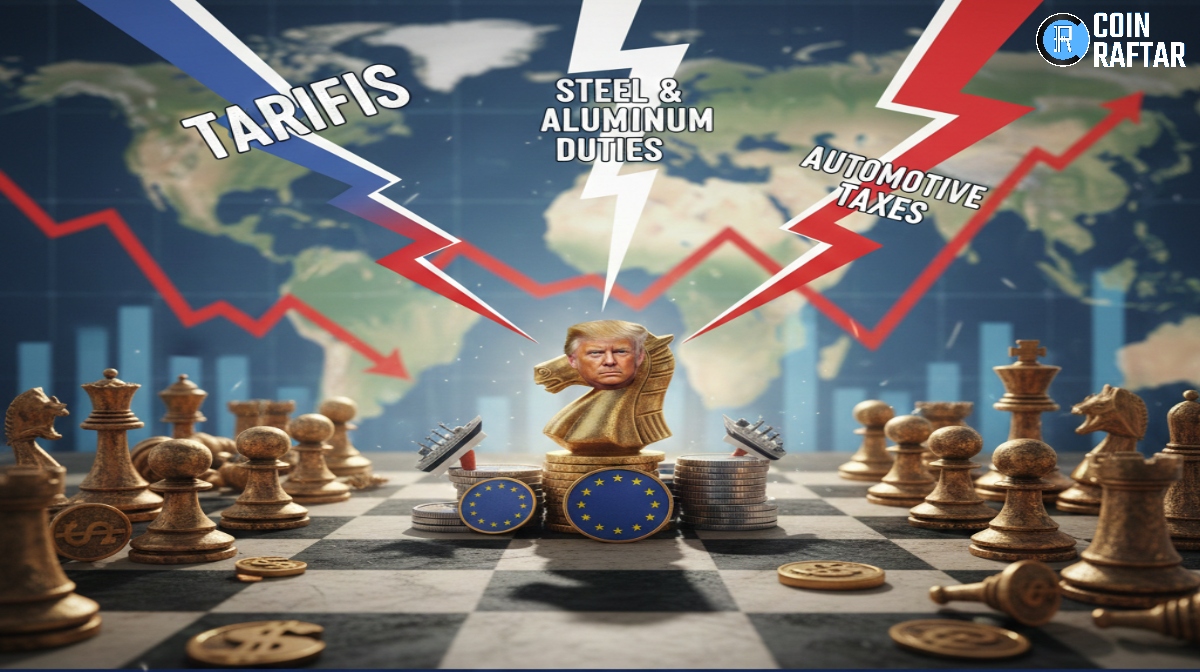
Trump EU trade tariffs have moved to the center of global market focus after renewed political tension between Washington and Europe. The dispute links tariff pressure to Greenland-related demands, drawing firm European resistance while investors assess legal clarity, inflation signals, and the pace of policy shifts ahead.
Trade Talks Face Open Resistance From Europe
The implementation of tariff plans by the Trump administration caused an immediate and drastic response from the EU when the EU released a statement threatening to end all ongoing trade negotiations.
This was amplified by the linking of Trump EU trade tariffs with Greenland publicly, which had the effect of changing the terms of the negotiations from privately conducted negotiations to public disagreements.
In a tweet posted by CryptosRus, President Macron of France made an unusually blunt statement regarding the threats made about the tariffs by President Trump, stating that France isn’t afraid of being bullied into changing its position and that there is a growing toughness and unification within the EU on the issue of tariffs.
https://x.com/CryptosR_Us/status/2012657433932349760?s=20
While the tweet said that current market conditions remain relatively calm, it was also noted that failed negotiations and public statements are beginning to make trade tensions more visible and decreasing optimism for a compromise in the short term.
Legal Confidence Strengthens U.S. Tariff Position
Comments made by Treasury Secretary Scott Bessent in connection with this update pertained to the legality of tariffs imposed on European Union (EU) products by President Trump.
According to Bessent, the Supreme Court would be unlikely to overturn tariffs established through emergency economic powers.
In addition, as a back stop, should refunds under the Trump EU trade tariffs arise, the Treasury has indicated it has $774 billion in cash reserves to cover potential refund amounts estimated between $50 billion and $150 billion.
This statement gives an immediate level of certainty to markets watching the tariffs established by President Trump on EU products.
As legal clarity establishes less risk of unexpected changes in tariffs, investors will be able to better recognise policy continuity.
Inflation Signals Complicate the Policy Landscape
Commentary on Bull Theory highlighted the growing differences between the officially released and real-time calculated measures of inflation.
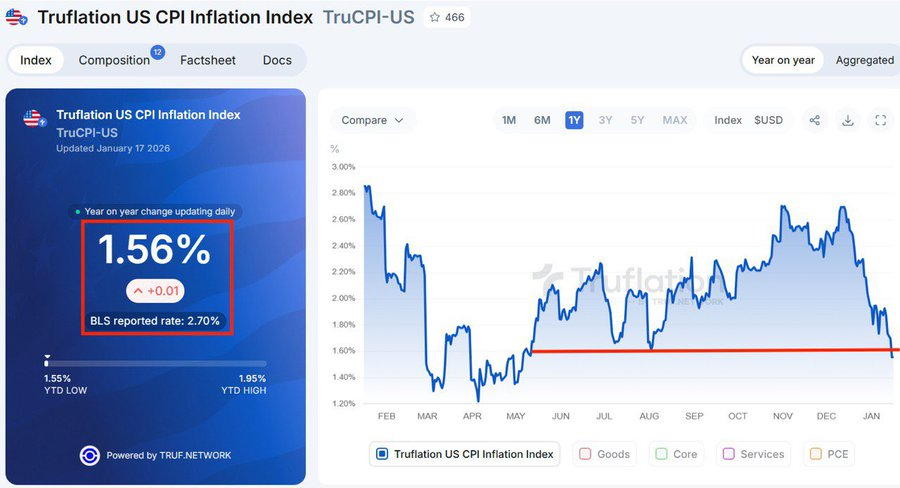
The official CPI represents an annualised inflation rate of approximately 2.7%, while current (real-time) inflation rates are at 1.56 %.
Official data provides a snapshot of the conditions that have taken place until now; however, in real-time, the old time tracking of inflation shows what is happening in current price trends.
Therefore, the difference between the two types of inflation data indicates that potential downward pressure on inflation has started to decrease more rapidly than previously thought.
 Source: X
These downward inflationary movements will redirect attention towards the potential risks of weakness and lower growth rates due to President Trump’s additional trade tariffs placed on imports from Europe.
As such, the combination of declining inflation readings, a slowdown in growth, decreased manufacturing output, and increases in bankruptcy filings will provide increased pressure on policymakers to change their output track going forward.
Europe Prepares a Coordinated Response
Additional reporting from Crypto India outlined broader tariff threats set to begin in February 2026. Several European countries could face a 10 % tariff, rising to 25 % by June if no agreement is reached.
The update noted that European nations are responding together rather than individually. France has joined military exercises in Greenland with Denmark, reinforcing collective positioning.
It also stated that the EU is moving to halt trade negotiations with Washington. This coordinated response extends uncertainty around Trump EU trade tariffs into the coming quarters.
For markets, extended negotiations often matter more than daily headlines. Investors now watch whether diplomacy, inflation trends, or policy easing will shape sentiment before tariff deadlines approach.