
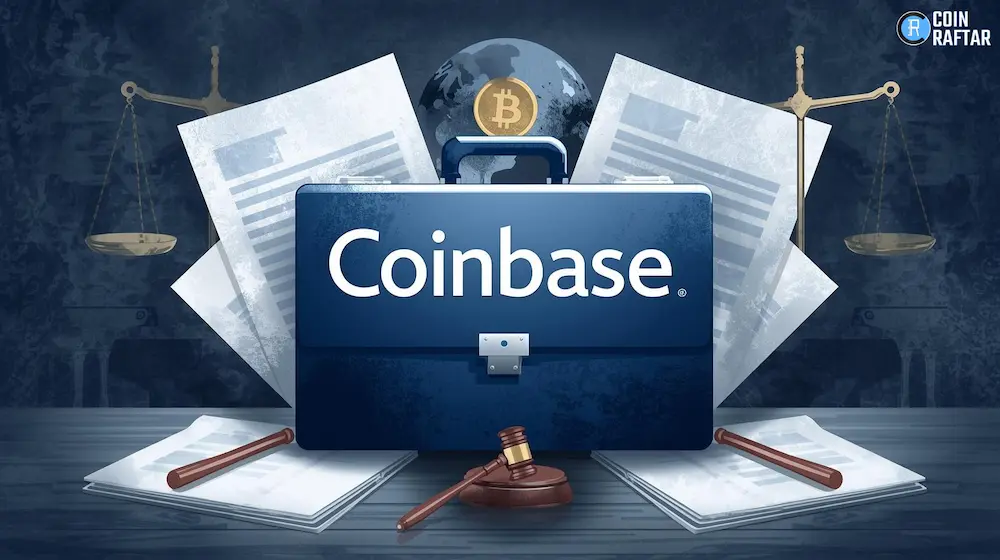
Key Insights:
- Coinbase files suit in three states to assert federal oversight of prediction markets by CFTC regulations.
- The exchange is set to roll out in the US with Kalshi beginning in January 2026 (legal pushback).
- States argue that event contracts are akin to gambling, while Coinbase claims they are regulated derivatives.
The regulation of prediction markets has been a subject of legal contention between Coinbase and regulators, with the company filing lawsuits against regulators in Connecticut, Illinois, and Michigan.
The exchange is requesting federal courts to confirm that event-based contracts offered on platforms overseen by the U.S. Commodity Futures Trading Commission fall under federal commodities law rather than state gambling rules.
The actions come as Coinbase prepares to enter the U.S. prediction market sector through a partnership with Kalshi, a CFTC-regulated platform specializing in event contracts.
According to court filings, Coinbase plans to provide U.S. customers with access to these markets starting in January 2026, including residents of Illinois.
Federal Law Versus State Gambling Codes
At the canter of the dispute is the issue of jurisdiction. Coinbase has argued that prediction markets that are listed on a CFTC-regulated exchange are subject to the Commodity Exchange Act, which assigns all oversight of futures, options, and other derivatives to the CFTC.
The company maintains that allowing states to apply separate gaming laws would fragment oversight and conflict with federal statute.
In public statements, Coinbase’s Chief Legal Officer, Paul Grewal, stated that the lawsuits aim to secure clarity on what he described as a settled point of law: that prediction markets fall under the CFTC’s supervision, not state gaming agencies.
https://twitter.com/iampaulgrewal/status/2001822879588192351
He warned that state-level enforcement efforts risk undermining federally regulated markets and creating uncertainty for businesses operating across the nation.
Moreover, Coinbase’s Illinois filing states that interference from state regulators could cause “immediate and irreparable” harm, particularly as the exchange prepares its rollout.
Are Event Contracts Gambling?
Several states have argued to the contrary that event-based contracts, particularly those associated with the outcomes of sports events, constitute unlicensed sports gambling. From that perspective, state gaming authorities claim the right to regulate or prohibit such products within their borders.
Grewal has also pointed to Congress’s definition of commodities, noting that lawmakers carved out only a narrow list of exclusions from CFTC oversight, such as onions and box office receipts. Sports-related event contracts were not among those exclusions.
Kalshi’s Ongoing Court Tests
The legal fight builds on nearly a year of proceedings involving Kalshi itself. The platform has faced challenges in at least six states over whether its sports and event contracts are federally regulated derivatives or forms of gambling subject to state law.
Court outcomes remain mixed. Judges in Nevada and Maryland have ruled that state gaming oversight applies despite Kalshi’s CFTC status. In contrast, federal courts in New Jersey and Connecticut have granted temporary protection from enforcement while broader injunction requests are considered. Massachusetts is also pursuing action against Kalshi, with a decision on an injunction not expected until early 2026.






Very interesting information!Perfect just what I was looking for!
Your article has proven useful to me.
thanks
I’m just in absolute disbelief by what I am seeing here today. Great post! You’ve made my day! Thx again. Thanks for writing this. I have been happy with Search engine. This information is magnificent. You’ve made my day! Thx again. I enjoyed reading this. Great read. It’s like you wrote the book on it or something. Nice write up. Good job on this article! Nice write up. It’s like you read my thoughts! Your article has proven useful to me. It’s like you wrote the book on it or something. You’ve made my day! Thx again.
Great post! You appear to know a lot about this. You appear to know a lot about this. Your article has proven useful to me.